
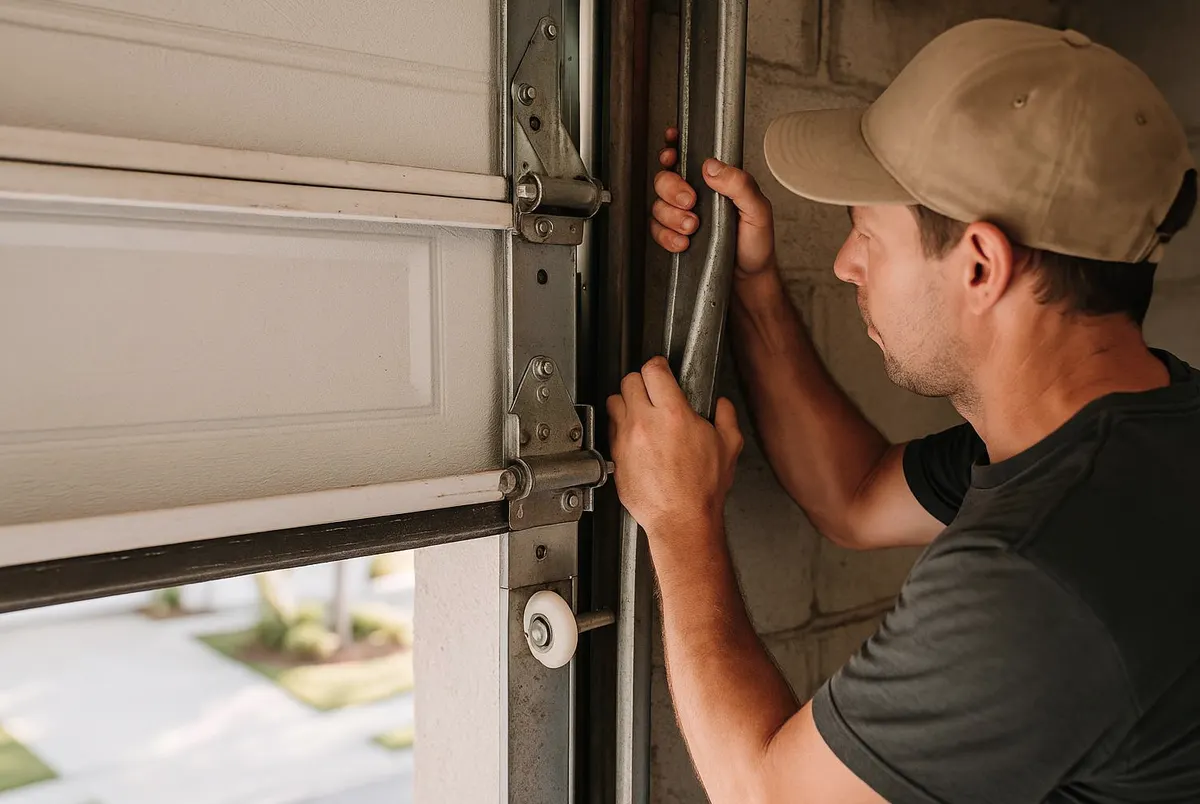
What a Technician Sees on a Typical Call
Most service calls about door material don't start with "I want a new door." They start with a problem: a wood panel that's swollen and won't sit flush after a wet spell, rust bleeding out from screw holes on a steel door that's taken years of sprinkler overspray, or an aluminum door with a dent from a stray branch after a storm rolled through. By the time we're standing in the driveway, the homeowner usually wants to know if a different material would have avoided the headache. Often the answer is yes, but it depends on what trade-off you're willing to live with.
Steel
Steel is the most common door we install and service in this area, and for good reason. It's affordable, comes in a wide range of styles, and with a factory baked-on finish it resists the humidity and heavy rain that are routine here most of the year. The weak point is the finish itself: once it's scratched or dented, bare metal is exposed and can start rusting, especially on doors that sit low to a driveway where splash-back and standing water are common after a downpour. Insulated steel (two layers with foam in between) also holds up better against the swings between a hot, humid afternoon and a cool night, which matters for garages that share a wall with living space.
Trade-offs
- Pros: Durable, low maintenance, wide style range, good value
- Cons: Can dent, bare-metal spots will rust if not touched up
Wood
Wood doors look great and are still popular on custom and higher-end homes, but they're the highest-maintenance option in a climate with heavy rain, humidity, and plenty of pine pollen drifting through every spring. Without regular sealing and repainting or staining, wood panels absorb moisture, swell, and can warp or crack as they dry back out. We see this most on doors facing west or south, where afternoon sun bakes one side while the other stays damp from shade and tree cover. Wood can last a long time here, but only with an owner who's committed to maintaining the finish every couple of years.
Trade-offs
- Pros: Custom look, can be repaired in sections, classic curb appeal
- Cons: High maintenance, prone to swelling/warping in humidity, needs refinishing
Aluminum
Aluminum won't rust, which makes it appealing in a humid climate, and it's lighter than steel, which can be easier on an aging opener. The trade-off is that aluminum dents more easily than steel and doesn't insulate as well on its own. It's a reasonable choice for detached garages or doors that aren't exposed to much foot traffic or stray lawn equipment, but it's not our first recommendation for a daily-use attached garage door in a neighborhood with kids, mowers, and the occasional haily thunderstorm.
Trade-offs
- Pros: Rust-proof, lightweight, lower stress on opener
- Cons: Dents easily, lower impact resistance, needs added insulation
Fiberglass
Fiberglass doors are built around a steel or aluminum frame with fiberglass panels over the surface, and they're genuinely good in this climate because they resist moisture, won't rot, and hold up to UV exposure without fading or cracking the way some finishes do after years of intense summer sun. They're also quieter and more impact-resistant than straight aluminum. The downside is cost and the fact that in very cold snaps, like the occasional ice storm that moves through, fiberglass can become more brittle than steel and crack on hard impact. For most of the year here, though, it performs well.
Trade-offs
- Pros: Moisture and rot resistant, holds color well, good for humid climates
- Cons: Higher cost, can crack in rare hard freezes
Composite
Composite doors (often a wood-grain overlay on a durable core) are a newer option that tries to split the difference: the look of wood without the swelling and warping. They handle humidity and heavy rain noticeably better than solid wood, and they don't need the same refinishing schedule. They cost more than basic steel but less than true custom wood, and for homeowners who want a wood look without the upkeep, they're worth a look.
Trade-offs
- Pros: Wood look without wood maintenance, resists moisture and pests
- Cons: Pricier than steel, fewer style options than real wood
What We Recommend for Typical Homes Here
For most attached garages in this area, an insulated steel door is still the best balance of cost, durability, and low maintenance against heat, humidity, and heavy rain. If curb appeal is the priority and you don't want to maintain real wood, composite is a strong alternative. Fiberglass is worth the extra cost on homes with heavy sun exposure or where moisture resistance is the top concern. Save wood for homeowners who genuinely enjoy the upkeep, and save aluminum for lower-traffic or detached structures.
When to Call McDonough Garage Door
If you're seeing rust bleeding through a steel door, panels that no longer sit flush on a wood door, or dents that are throwing off the balance of the track, it's worth a look before the problem spreads. We handle Garage Door Installation for homeowners ready to switch materials, and Garage Door Maintenance for those who want to extend the life of what they already have with seasonal adjustments and finish checks before the next round of heavy rain or pollen.
If you're weighing materials for a new door or just want an honest read on whether your current one is worth repairing, give McDonough Garage Door a call. We serve McDonough, GA and the surrounding Henry County area, and we'll walk the driveway with you and lay out your options in plain English.