
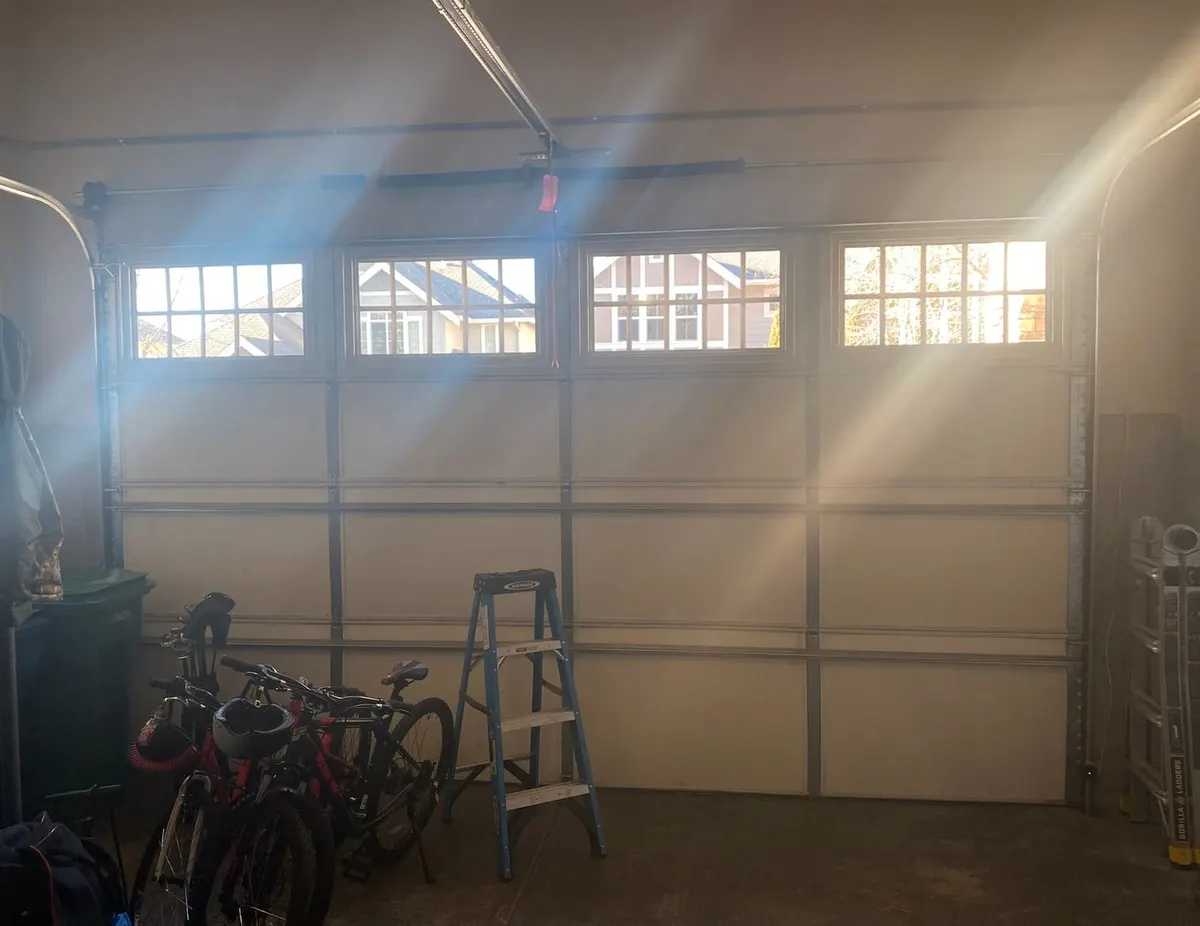
The Moment You Notice Something's Off
It usually happens on an ordinary morning. You hit the opener button on your way to work and the door doesn't rise the way it always has. Maybe it hesitates for a half-second before moving. Maybe one side dips lower than the other as it goes up. Maybe there's a new sound in the mix — a grind, a pop, a metallic creak you can't quite place. Nothing dramatic happens. The door still opens. But something in your gut says it didn't used to sound like that.
That instinct is worth trusting. Garage door springs — whether you have a torsion spring mounted horizontally above the door or a pair of extension springs running along the upper tracks — almost never fail without warning. They wear down gradually, cycle after cycle, and the signs show up well before the actual break. The trick is knowing what to look and listen for. Walk through the checklist below in your own garage, with the door closed and the opener disconnected if you can manage it safely.
Spring Wear Checklist
1. Listen while the door moves
Stand near the door as it opens and closes. A healthy spring system runs with a fairly consistent, low mechanical sound. A worn spring often adds a grinding or popping noise as the coils rub unevenly, or a sharp metallic twang as tension releases inconsistently. If the sound has changed recently and keeps getting louder, the spring is losing its even tension and working harder than it should.
2. Check the coil spacing on a torsion spring
Look at the torsion spring itself, mounted on the shaft above the door. The coils should sit close together with even, tight spacing along the whole length. If you see a gap opening up between coils, or the spring looks stretched compared to how it sat when installed, that's a sign the steel is losing its ability to hold tension. A spring that's visibly gapping is closer to the end of its life than one that still looks tightly wound.
3. Look for rust and pitting
Run your eyes over the full length of the spring, not just the ends. Henry County's humidity, heavy summer rain, and the moisture that lingers around garages built close to pine cover all give rust a head start. Surface rust alone isn't an emergency, but pitting — small pockmarks where rust has actually eaten into the metal — weakens the coil at that exact point. A pitted spring can snap there even if the rest of it looks fine.
4. Test the door's balance by hand
With the opener disconnected (pull the release cord), lift the door manually about halfway and let go. A properly balanced door with healthy springs should stay roughly in place, maybe drifting an inch or two. If it slides shut on its own or shoots upward, the spring tension is off, which usually means a spring has started to weaken unevenly.
5. Watch how the door closes
Closed doors should land flat and square against the floor. If one side touches down before the other, or the door racks slightly as it closes, one spring is likely carrying more load than its partner. This is common with torsion pairs and with twin extension springs — one wears faster, throws off the balance, and puts extra strain on the cables, rollers, and the opener motor.
6. Check extension springs for stretch
If your door uses extension springs along the horizontal tracks, look at them at rest, fully closed. They should sit with their coils close together, not visibly elongated. A spring that stays stretched out even when the door is down has lost some of its recoil strength and is working past its intended range.
7. Inspect the cables near the springs
Cables run in tandem with the springs and go slack when spring tension drops. If you notice a cable with visible slack, fraying strands, or one that looks like it's sitting loosely in its drum or pulley, that's often a downstream symptom of a spring that's no longer holding its share of the door's weight.
8. Pay attention to the opener's effort
If the opener motor sounds like it's straining, slows down partway through a cycle, or the door seems to shudder as it travels, the motor may be compensating for a spring that isn't doing its job. Openers aren't built to lift a garage door's full weight alone; that's the spring's work. A struggling motor is often a spring problem wearing a different disguise.
9. Know the age and cycle count
Standard torsion springs are generally rated for around 10,000 cycles, with one open-and-close counting as a cycle. A door used several times a day adds up faster than you'd think, and heavier insulated doors shorten that lifespan further. If you don't know when the springs were last replaced and the door has been in regular use for several years, treat it as due for an inspection regardless of how it looks or sounds right now.
Why Fall Is the Right Time to Check
Cold snaps and the occasional ice storm that roll through this part of Georgia in winter make steel more brittle and lubricant thicker, which adds extra strain to a spring that's already weakening. A spring that's been quietly wearing down all through the humid summer months often picks winter to finally let go. Running through this checklist now, before the first hard cold hits, gives you a chance to catch the wear while it's still a repair instead of an emergency.
When to Call McDonough Garage Door
If you've gone through the checklist and found gapping coils, rust pitting, an unbalanced door, or a spring that just doesn't look right, don't wait for it to confirm your suspicions by snapping. Our Spring Replacement service handles both torsion and extension systems safely, with the right tools and tension gauges this job actually requires. If you're not sure whether what you're seeing is wear or just normal aging, our Garage Door Maintenance visits include a full spring and cable inspection so you get a straight answer instead of a guess.
If you're noticing any of these signs on your garage door in McDonough, Stockbridge, Locust Grove, or anywhere else in Henry County, give McDonough Garage Door a call. We'll take a look, tell you plainly what's going on, and get it handled before it becomes a snapped spring and a stuck door.