
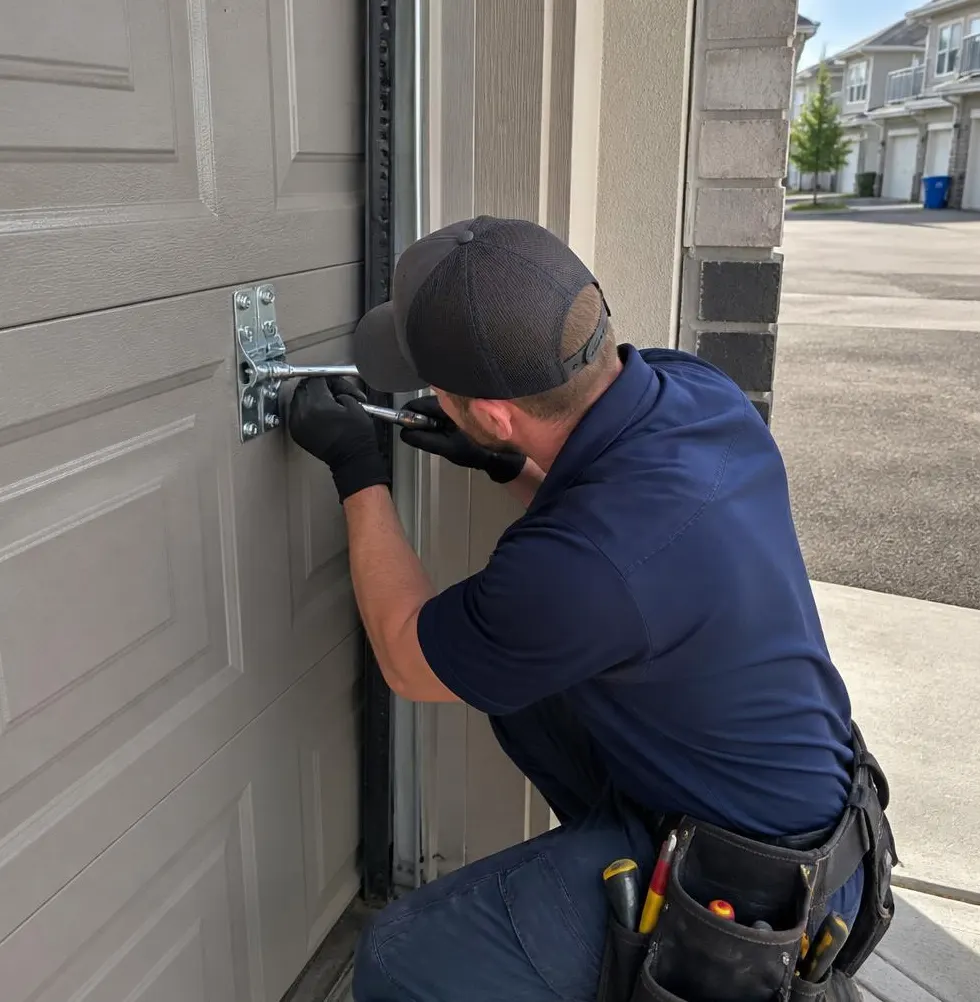
Rule of thumb: nine times out of ten, a garage door that won't open has an electrical problem, not a broken one. The exception is when the door won't budge even by hand with the opener disconnected — that's almost always a spring or cable, and it's not a DIY fix.
What the Symptoms Usually Tell You
Before any tools come out, a technician asks what the door is actually doing, because that narrows the list fast:
- Nothing happens at all — no light, no hum, no click — points to power.
- Opener hums or clicks but the door doesn't move — points to the motor, gear, or a disconnected trolley.
- Door opens a few inches, reverses, or won't close — points to the safety sensors or a track obstruction.
- Remote doesn't work but the wall button does (or vice versa) — points to batteries, programming, or the control itself, not the door.
- Door is heavy, uneven, or won't lift manually — points to a broken spring or cable, which is a bigger job.
The Order a Technician Checks Things
1. Power to the Opener
First stop is always the simplest: is the opener plugged in, and is the outlet live? Garage outlets are commonly on a GFCI circuit, and those trip easily — a spike in humidity, a surge from storms, or a shared circuit with holiday lights can pop it with no obvious sign. A tech checks the outlet, the breaker, and the GFCI reset button before touching anything mechanical.
2. Safety Sensors (Photo Eyes)
If the door reverses, stops short, or won't close at all, the two small sensors near the floor on each side of the track are next. They need a clear, aligned line of sight. Spiderwebs, pine debris, dust, and condensation on the lenses are all common culprits here, especially after a humid stretch or heavy rain. A misaligned bracket from a bumped car or a weed-whacker nick in the wire will cause the same symptom.
3. Remote, Wall Control, and Batteries
Dead batteries, a dirty contact on the wall button, or a remote that's lost its programming are checked next because they're fast to rule out and common enough to matter. If one remote works and another doesn't, the problem is almost never the door.
4. Manual Disconnect (Release Cord)
Every opener has a red release cord that lets the door run on manual track if the power goes out. After an outage — which isn't rare here when storms roll through — some homeowners pull it to get the car out and forget to reset it. If the trolley is disconnected, the opener will run but the door won't move with it. This is a 30-second fix once it's identified.
5. Springs
If the door won't lift by hand, or lifts unevenly, a tech looks at the torsion spring above the door for a visible gap in the coil. A broken spring means the opener is trying to lift the full weight of the door alone, which it isn't built to do, and it won't get far. This is not a job to force through with the opener repeatedly — that just risks stripping the gears or burning out the motor on top of the spring problem.
6. Cables
Next are the lift cables that run alongside the tracks. Frayed strands, rust, or a snapped cable will cause the door to hang crooked or jam partway. Cables take a beating from moisture over the years, and a cable that's rusted through on one side often comes with a spring that's not far behind it.
7. Opener Motor and Gear
If power, sensors, and the disconnect all check out but the opener still won't drive the door, the motor or the internal drive gear is next. The nylon gear inside most openers is a wear part by design — it's meant to strip before it damages the motor, and age plus heat cycles through the summer shorten its life. A humming motor with no movement is the classic sign.
8. Track and Rollers
A bent track, a roller knocked loose, or debris jammed in the track will stop a door cold. In winter, a door that's been shut tight through a hard freeze can also have ice bonding the weatherstripping to the slab — it looks like the door won't open when really it's stuck to the ground. A gentle check before forcing the opener saves a bent panel.
9. The Lock
Last on the list because it's rarely forgotten, but it happens: some doors have a manual slide lock on the inside track. If it's engaged, the opener will run and do nothing, same as a disconnected trolley.
When to Call McDonough Garage Door
If you've checked the outlet and the sensors and the door still won't move, or if lifting it by hand reveals it's heavy or uneven, stop there. A broken spring or cable under tension is dangerous to handle without the right bars and clamps, and a stripped opener gear is cheap to replace if it's caught early but expensive if the motor goes with it. We offer Garage Door Repair and Spring Replacement for exactly these situations, and if your door picked the worst possible moment — after hours, before a storm, right before you need the car — our Emergency Garage Door Service covers McDonough, Stockbridge, Locust Grove, Hampton, Conyers, Covington, Jonesboro, and Griffin.
If your garage door in or around McDonough, GA won't open, give us a call. We'll walk through the same checklist on-site, explain what we find in plain English, and get it moving again.